

Advanced Water Purification in Arizona: Understanding AWP
Published: 08/21/2026
A history of advanced water purification around the world shows how AWP can help Greater Phoenix municipalities increase water supplies
As municipalities in Arizona evaluate their water future, many are considering the benefits of Advanced Water Purification (AWP), a technology that feels new but has been used around the world for decades.
Advanced water purification is a form of recycling and reusing water. Through processes including reverse osmosis, ultrafiltration through a membrane bioreactor, and ultraviolet oxidation, particles including dirt, pathogens and chemicals are removed from water to make it safe for consumption. There is consistent monitoring throughout the process, ensuring safety and accuracy each step of the way.
“The biggest misconception about advanced water purification in general is the idea that we’re somehow making a compromise with water quality, and that’s not the case at all,” said Max Wilson, city of Phoenix Water Resources Management Advisor. “Advanced purified water is the cleanest water that we can produce today.”
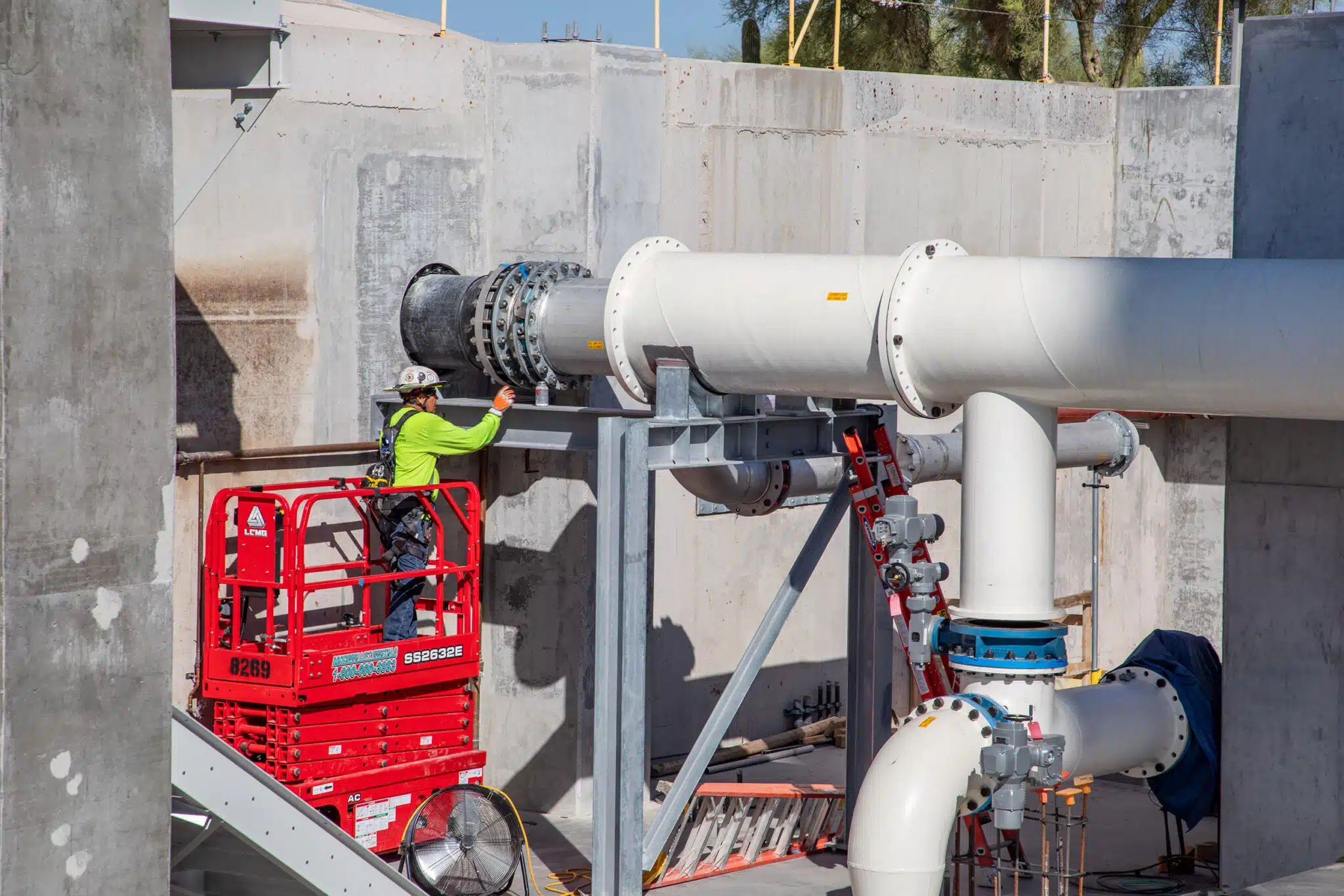
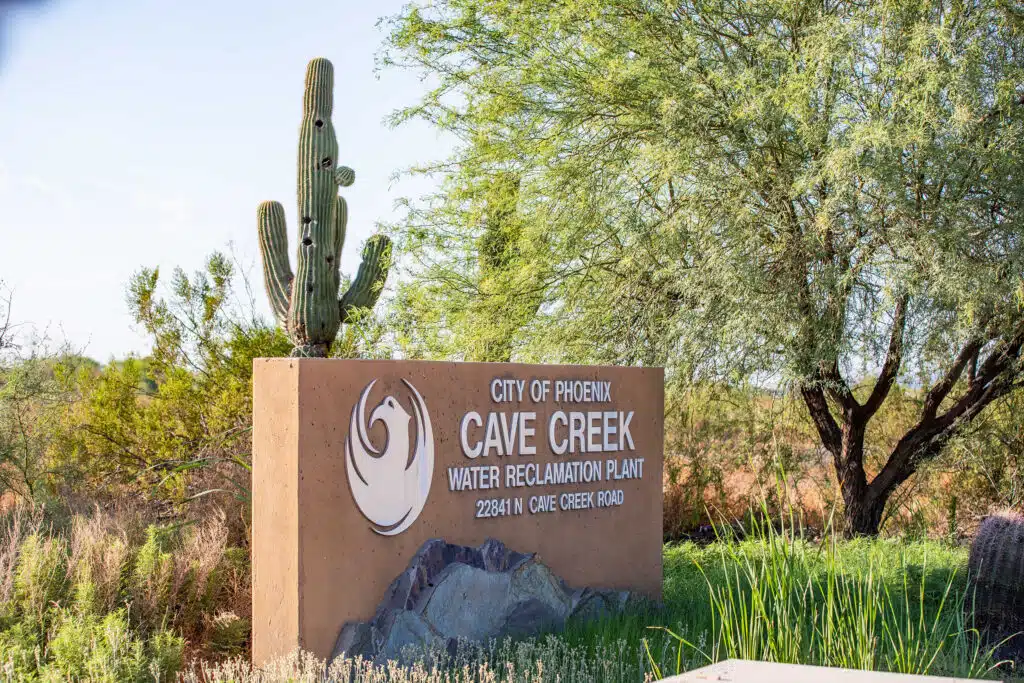
Construction on a potable AWP facility is underway in Phoenix, where the Cave Creek Water Reclamation Facility will clean and direct water from the northeast to the southwest of the city. In Scottsdale, the Advanced Water Treatment Facility cleans water for indirect potable reuse and has been in operation for more than 30 years.
“Water purification uses tried-tested-and-true technology that we’ve been using for decades,” Wilson said. “It allows us to take that water that we already have and treat it to new levels of purity above and beyond what we can currently access.”
With further investment in these facilities, Arizona can decrease reliance on water sources like the Colorado River, the Salt and Verde rivers, and groundwater.
To understand advanced water purification, first we must learn about its uses in potable and non-potable water supplies
Potable vs. Non-Potable Water
The difference between potable and non-potable water comes down to how it’s treated and used.
Potable water is used for drinking, cooking and hygiene, and goes through ultra-rigorous water-cleaning processes to return it to the consumer. Non-potable water is used for things like agriculture, irrigation and industrial uses.
There are two types of potable water. Indirect goes through advanced treatment, and then must be put into an environmental buffer like an aquifer or lake before being treated again. After this, it is ready for consumption. Direct potable water does not require the environmental buffer.
Non-Potable Advanced Water Purification
For a century, AWP has been used for potable and non-potable water applications around the world, spanning countries and industries.
In 1918, California developed early regulations for recycled water for irrigation, allowing for more sustainable methods of agricultural water use. In the 1950s, Japan began reuse for industrial means, setting the stage for the modern-day economy.
Arizona’s introduction came in 1984, when the Gainey Ranch Water Reclamation Facility became the first in Arizona to return non-potable water for golf course irrigation. Operations of the plant were transferred to the city of Scottsdale to reclaim and treat wastewater, which it began doing in 1987. Through a process of ozonation, membrane filtration, reverse osmosis and ultraviolet photolysis, billions of gallons of non-potable water have been restored, limiting reliance on other sources like groundwater and the Colorado River.
“AWP is nothing new. We have had the technologies that are the basis of advanced water purification for literally my entire life,” Wilson said.
Others around the globe have transitioned to potable water reclamation.
Potable Advanced Water Purification
Water Factory 21 in Orange County has used reverse osmosis to purify wastewater into drinking water standards since 1977. The Californian county continued doing so until 2008, when the Groundwater Replenishment System was constructed to purify up to 70 million U.S. gallons daily for potable reuse. It has almost doubled in size since, now producing up to 130 million gallons per day, enough to serve 1 million people. It became the first location for bottled advanced purified water in the Western Hemisphere, according to the Orange County Water District.
“What advanced water purification allows us to do is get the most out of every single drop of water we can access,” Wilson said. “As a resident here in Phoenix, you can know that every single drop of water that comes into our system is being used as efficiently and responsibly as possible to ensure that we can maintain the quality of life that all of us want to have here in the Valley.”
Across the world, other water-stressed countries have turned to AWP. Windhoek, Namibia has the longest-running facility, operating a plant since 1968 that has since been upgraded to produce about 5.5 million gallons of clean water daily. Singapore, which imposed rationing measures during droughts in the late 1800s, early 1900s and the 1960s, launched its NEWater plant in 2002, providing options for non-potable and indirect potable use. In Australia, there are several facilities, the largest of which can provide up to 100% of the total flow of the Molonglo and Murrumbidgee rivers during dry periods.
Texas was home of the first direct potable reuse plant in the U.S. Its Raw Water Production Facility in Big Spring treats up to 1.7 million gallons per day and is combined with surface water to produce drinking water for Big Spring, Odessa, and Snyder.
Looking forward at AWP in Phoenix
“If we don’t reuse that water, we are leaving water on the table.” Wilson said. “As we move into a time of increased shortage on the Colorado River, we have a question to ask ourselves: Do we want to leave water on the table, or do we want to do our part to ensure that we have access to every single drop of water that we possibly can?”
Construction of the Cave Creek plant is expected to be completed in 2027. At this point, water monitoring will begin ahead of anticipated distribution beginning in 2029. There are additional plans through Pure Water Phoenix for two more facilities: the North Gateway Advanced Water Purification Facility and the 91st Avenue Wastewater Treatment Plant.
“In order to live in the futures that we’re looking at, we’re going to need every tool in the toolbox to fight drought, to fight climate change, and to ensure that we have access to all of the water resources that we need to have the quality of life that we want here in the Valley,” Wilson said.