
Understanding Data Centers: What Do These Mission-Critical Operations Do?
The average U.S. household is connected to more than 20 devices, and the average American checks their phone up to 200 times per day. Any time you scroll social media, take video or photos, or send an email, data centers are powering those actions. With the expansion of internet access and rapid adoption of artificial intelligence, the data center industry is experiencing growth like never before, with global capacity projected to double by 2030.
Data Centers Industry Report
Get our 20-page, in-depth report on the data center ecosystem in Greater Phoenix.

Data Center Cluster
Learn about the three types of categories in which data centers are usually owned and operated.

Economic Impact
Through income and tax revenues, construction, infrastructure, and technology and industry advancement, data centers can generate significant economic benefits for communities in which they operate.

Community Engagement
Data centers often invest in their communities, with priorities ranging from education and workforce development to environmental contributions and philanthropy.

Arizona Utilities
Arizona Public Service (APS) and Salt River Project (SRP), Arizona’s largest providers, are prioritizing reliability to current customers as they evaluate grid expansion.

Local Data Center Regulations
Many cities and towns in Greater Phoenix have established guidelines for data centers considering expansion into the region.

Greater Phoenix Quality of Life
With the significantly lower cost of living across all major expenditures, Greater Phoenix offers shorter commute times for more free time and more than 300 days of sunshine annually.
20+
The average U.S. household is connected to more than 20 devices
2030
Global capacity is projected to double by 2030.
3
There are three primary types of data centers
Data Center Cluster
Ownership and operation of data centers typically fall into one of these three categories:
Enterprise Data Centers
Enterprise Data Centers are built, owned and operated by a single company exclusively for its own internal use, whether in a standalone facility or as part of a larger campus.

Colocation Data Centers
Colocation Data Centers are owned and operated by a third-party provider that leases space, power and connectivity to multiple tenants. Rather than building their own facility, companies space within a shared environment.

AI Data Centers
Artificial Intelligence (AI) Data Centers are purpose-built facilities designed to handle intense computational demands of artificial intelligence workloads.

Economic Impact
How do data centers affect an economy?
Data centers generate significant economic benefits for the communities and regions where they locate, from the moment construction begins to decades of ongoing operation.

Construction
Data center construction creates a surge of activity for local skilled trades over a timeline that can span years. Greater Phoenix ranked second among all U.S. markets in 2025 for data center capacity under construction, making data center construction one of the most reliable sources of sustained work for local contractors and trades.
Infrastructure
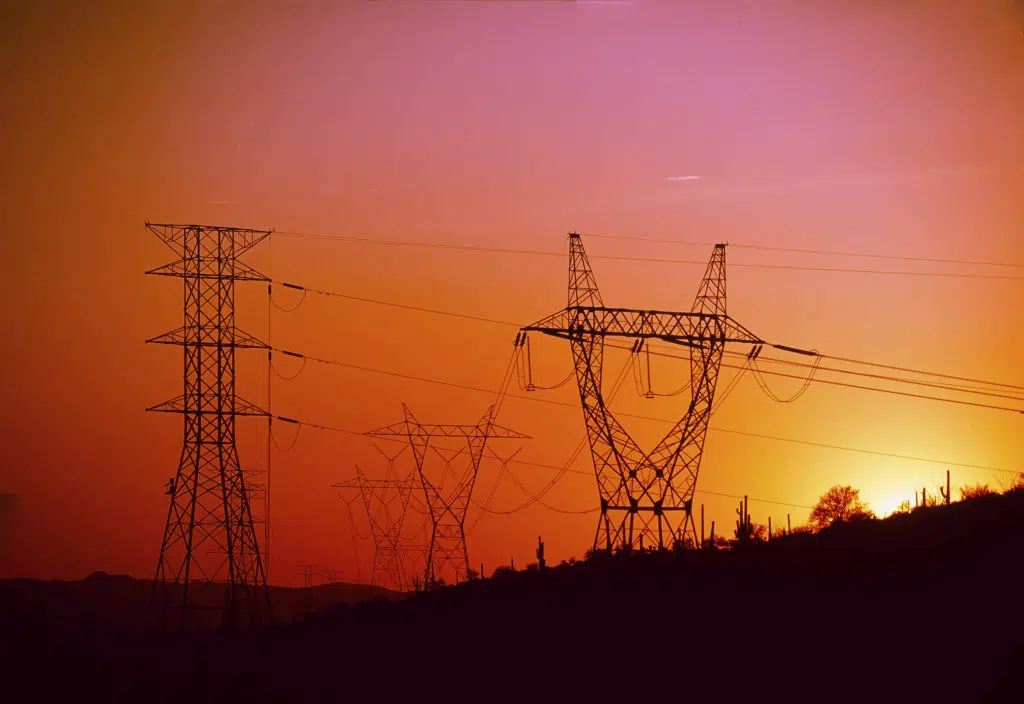
Data centers often require substantial improvements to roads, utilities, power systems, and fiber to support their operations. These upgrades, often paid for by the data center, extend beyond the facility to benefit the surrounding area. They represent an opportunity to modernize or expand infrastructure and open up growth corridors.

Technology & Industry Advancement
Data centers signal long-term economic stability to a region and attract further investment, functioning as foundational infrastructure similar to a power plant or water system. This “halo effect” draws in related industries including software, cybersecurity, AI research and cloud services.
Building out the supply chain
The data center industry supports companies throughout the supply chan, providing direct and indirect benefits to high-tech businesses operating within the ecosystem. A variety of suppliers ranging from equipment and energy to chip manufacturers and computing hardware have operations in Greater Phoenix, including:





Greater Phoenix data center industry
108,000
jobs supported since 2017
$11.1B
supported to state GDP
50%
GDP growth supported
By The Numbers
Data centers offer a tangible economic value through personal income, economic output and tax revenues.
The scenarios below describe the potential economic impacts to Greater Phoenix based off medium-sized enterprise and colocation scenarios over a 10-year time window. See the full list of assumptions within the downloadable use case document here.
Personal income is defined as total salary for all employees across the 10 years. Economic output is the direct value of services produced by the business. Revenues are taxes and shared state revenues, excluding local revenues.
10-Year Direct Economic Impact to Host City
| Impact | Jobs | Personal Income | Economic Output | Revenues |
|---|---|---|---|---|
Colocation |
50 |
$47,525,850 |
$151,407,060 |
$69,618,045 |
Medium |
50 |
$47,525,850 |
$151,407,060 |
$14,657,655 |
Low |
20 |
$23,762,930 |
$75,703,530 |
$7,457,290 |
Comparing Data Centers, Distribution Centers and High-Tech Manufacturers
The following scenarios compare the 10-year economic impacts of a medium-sized data center to a comparable medium-sized distribution center and a medium-sized high-tech manufacturing plant.
| Impact | Jobs | Personal Income | Economic Output | Net Direct Revenues |
|---|---|---|---|---|
Data Center |
30 |
$47,525,850 |
$151,407,060 |
$14,657,655 |
Distribution Center |
140 |
$221,787,310 |
$706,566,280 |
$7,631,155 |
High-Tech Manufacturer |
375 |
$445,754,480 |
$2,018,708,010 |
$10,383,505 |
Download the full data centers industry analysis for more on Greater Phoenix data centers.
Community Engagement
Beyond the economic footprint
Data centers are large-scale power and water users, though those that have closed loop cooling use less water than peers within the industry. In effort to combat some of these effects, many data centers make community investments in areas ranging from environmental stewardship to community grants and education and workforce development.

Apple is the largest investor of Salt River Project’s (SRP) Resilient Water and Forest Initiative to thin forest at severe wildfire risk in the Colorado Basin. This is projected to deliver nearly 2 billion gallons of water to the watershed.

Meta is supporting 12 regional water conservation and restoration projects that return hundreds of millions of gallons of water to Arizona watersheds.

Cox Charities has invested more than $11 million in Arizona nonprofits over the past three decades, supporting approximately 1,950 organizations focused on education, diversity, environmental sustainability, and digital equity

CyrusOne partners with the Bonneville Environmental Foundation’s Change the Course program to support local watershed restoration.
Microsoft’s Data Center Community Development Initiative has supported 93 community projects with more than $3 million in investment since 2019 and has made investments in water replenishment partnerships across Greater Phoenix.
Compass hosts specialized training for the Goodyear Police Department, runs an annual toy drive supporting local nonprofits, and has invested in local public infrastructure.
Arizona Utilities
Understanding Power Infrastructure
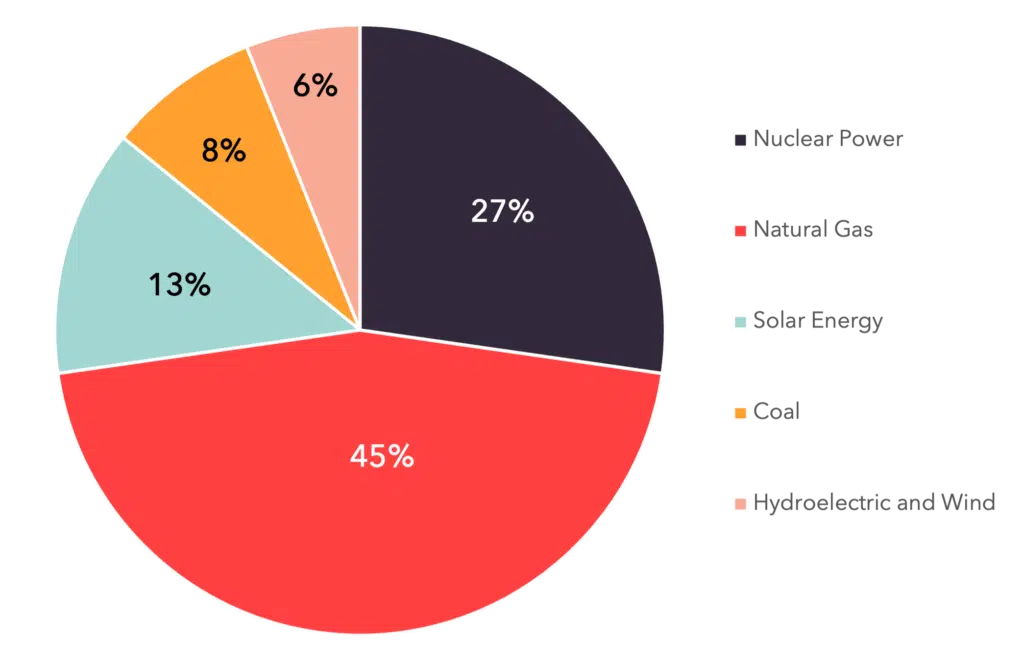
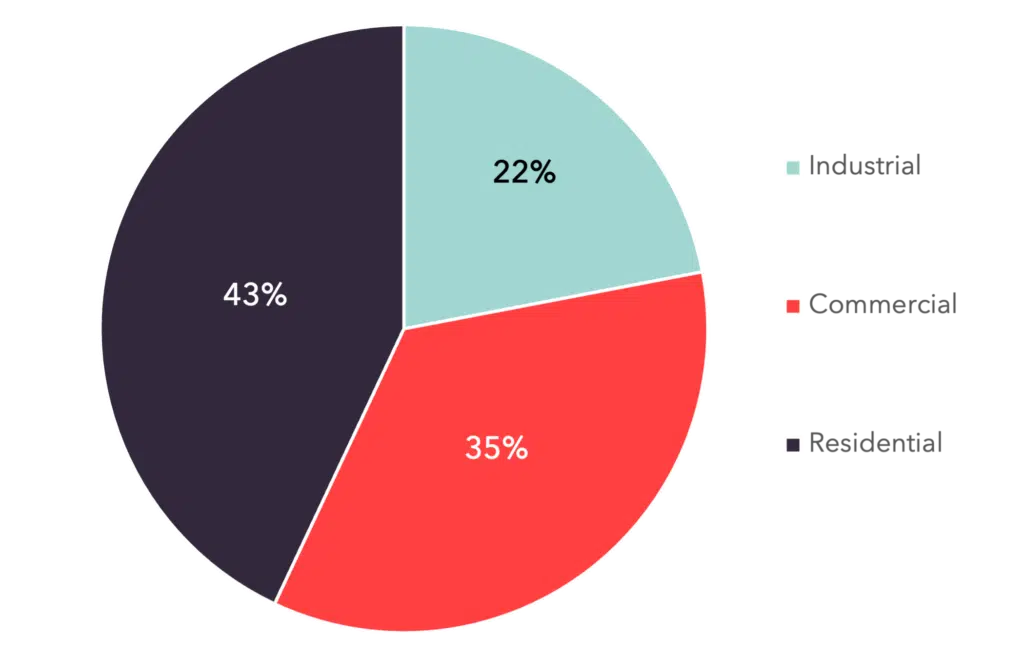
Greater Phoenix ranked fourth among data center markets in 2024. As demand for data center development accelerates around the country, understanding Arizona’s electricity landscape — how power is generated, how it’s consumed, and where new capacity is coming from — is essential to maintaining a sustainable ecosystem.
Electricity Generation
Electricity Consumption
Arizona Public Service (APS)
APS is Arizona’s largest utility, providing power to approximately 1.4 million customers across Arizona. As the operator of the Palo Verde Generating Station, one of the nation’s largest producers of carbon-free electricity, APS plays a central role in supplying electricity across the Southwest. The company is increasing its energy mix through projects like the proposed Desert Sun natural gas plant, the Pioneer Clean Energy Center, and the Agave Solar Plant. Its proposed “Growth Pays for Growth” strategy includes a rate increase for extra-large energy users, along with formula rates that would allow annual adjustments tied to the actual cost, providing protections to existing residential and small business consumers.

Salt River Project (SRP)
SRP is a community-based, not-for-profit public power utility and the second-largest electricity provider in Arizona. SRP’s diverse generation portfolio includes natural gas, coal, hydroelectric, nuclear and renewable resources. The company is expanding its portfolio through projects like the Coronado Generating Station Repower Project, the Copper Crossing Energy and Research Center, and the Marigold Energy Center. It has developed multiple payment plans to ensure large-load customers like data centers pay for their needed infrastructure, including the Large Customer Integration Process and the E-67 Price Plan.

Other Projects
- Desert Southwest Expansion natural gas pipeline from Texas expands capacity of the pipeline to 1.5 billion cubic feet per day.
- APS, SRP and Tucson Electric Power (TEP) are evaluating small modular reactors and large reactor projects to add new nuclear generation across Arizona.
- SRP’s planned pumped storage hydropower project would add up to 2 GW of hydropower on the Salt River reservoir system.

Water in Arizona
Water is a precious resource in Arizona, and stewardship has been a priority since before statehood. Arizona uses about the same amount of water today as it did in the 1950s despite a 5x increase in population and 15x economic increase. Only 6% of water goes to industrial and manufacturing ecosystems; the rest is used for residential and agricultural purposes. Explore GPEC’s water page for more.
1950s
Arizona uses about the same amount of water as it did in the 1950s despite massive population and economic growth
89%
More than 89% of water in Greater Phoenix's waste stream is reclaimed and reused for parks, aquifer recharge, power generation and more.
$60.3M
Greater Phoenix has invested $60.3M toward water conservation, advanced technology, infrastructure improvements and sustainability.
Greater Phoenix regulations
Each city and town in Greater Phoenix has different needs. As such, the demand for data centers varies by municipality. Many have crafted regulation around the expansion of data centers to ensure thoughtful, long-term planning for the industrial base and residents in the areas.
This includes:
Data center-related ordinances
- Maricopa County’s modernized zoning ordinance formally defines data centers in county zoning rules for the first time and limits them to general industrial and heavy industrial districts within unincorporated parts of the county.
- Chandler’s data center zoning ordinance is one of the first of its kind in the U.S., establishing Planned Area Develompent zoning designations and requiring additional protocol and studies.
- Goodyear is updating its zoning ordinance to establish formal data center development standards covering noise, building design and water use, transitioning away from case-by-case development agreements as the city’s data center industry expands.
- Mesa’s data center zoning regulations restrict data centers to general industrial and heavy industrial districts and establishes new development standards including a residential separation, height limit, mechanical equipment screening and required sound study.
- Phoenix’s data center zoning regulations direct future data centers away from designated employment centers, reserving prime industrially-zoned parcels for higher-employment uses.
Greater Phoenix municipalities strategically plan the best locations for data centers considering expansion, minimizing impacts to existing urbanized communities while amplifying opportunities to expand power, wastewater, and corridors for future growth. Contact GPEC for more information.
Quality of Life

Experience a vibrant lifestyle and diverse culture at an affordable cost of living.
Enjoy the outdoors with more than 300 days of sunshine, average temperatures of 75 degrees, convenient access to over 400 hiking trails and globally recognized sporting events. Take part in a vibrant arts and culture scene that includes prominent classical arts to public art to craft markets and a diverse range of music and cultural events. And, eat well with fresh farmers markets in every city, and globally recognized chefs and culinary experiences at your doorstep.
Calculate your savings
Select your annual income, monthly mortgage, healthcare and grocery costs to find how much you would save with a move to Greater Phoenix.
Austin
Dallas
Denver
Los Angeles
Portland
San Francisco
Seattle
Annual Income
Monthly Mortgage
Monthly Healthcare
Monthly Groceries
Total Annual Savings
$
Source: C2ER 2025 Q3 Cost of Living Analysis; Zillow Research July 2025


