
Industry Outlook Report
October 2026
Arizona is one of the most closely watched manufacturing stories in the country, and not only because of semiconductors. Around each major investment, a wider economy is taking shape, even as the technologies that define how things get made are changing quickly.
Overview
Recently, the Greater Phoenix Economic Council (GPEC) convened local manufacturing and related company leaders at a roundtable to discuss the current state of the industry and future opportunities. The insights gathered were instrumental in shaping this report. The report focuses on two pillars. The first examines which industries are growing because of Arizona’s major manufacturing investments outside of the direct semiconductor supply chain. The second looks at which emerging production technologies are reshaping manufacturing in Arizona and beyond. Fabs, equipment, wafers, packaging, and testing are covered in GPEC’s companion semiconductor report, which will be published later this fiscal year.
The threads connecting both pillars are colocation and workforce. Physical and organizational latency is a real cost: when a tool goes down, a supplier’s response time is measured in hours, and every hour of delay is an hour of lost production. Clustering reduces that latency, which is why one anchor investment can pull in suppliers, talent and capital. A broker on the roundtable who has worked for 23 years in the Deer Valley area of north Phoenix, home to the new Arizona campus for Taiwan Semiconductor Manufacturing Company (TSMC), said he has never seen the area busier. One supplier’s CEO said the company chose a building there for its proximity to TSMC.1
The region has more than 4,000 manufacturers and about 147,900 manufacturing employees, growing by 11.4% from 2020-24.2 However, Greater Phoenix lost about 900 manufacturing jobs (0.6%) from 2024-25. This mirrors trends seen nationally, with the U.S. increasing its manufacturing workforce by 5.8% from 2020-24, then declining by 1.1% over the last year. Job growth is expected to rebound over the next five years, but at a slower pace (6% in Greater Phoenix and 2% nationally). At the same time, Area Development recently noted that the average capital investment for economic development projects is triple the level that it was five years ago.3 The gap may be a harbinger of the new economic landscape in emerging manufacturing: increasingly capital-intensive projects with lower headcounts, potentially leading to a mismatch of available workers and skills needed in the future.
1 CoStar via Orion Property Group, “Contractor tied to TSMC adds to industrial boom in Phoenix’s chipmaking hub,” Aug. 4, 2026.
2 Lightcast Q3 2026. Defined as NAICS code 31-33
3 Area Development, “Project counts are falling. Why that’s not bad news for economic developers,” Q3 2026.

Pillar 1 – Major Manufacturing Investments
An anchor investment serves as an impetus for adjacent investment, which Greater Phoenix has experienced with projects ranging from advanced manufacturing-related additions like cleanroom construction, specialty gas, and water suppliers and logistics, as well as supporting projects like retail, restaurants and housing. While the anchor institution benefits from this attraction, so do other industries and nearby residents that need these resources. The $7 billion Halo Vista development is a direct example of this. Spanning 2,300 acres beside TSMC’s north Phoenix campus with up to 30 million square feet planned, this project will feature industrial, manufacturing, office and retail facilities, as well as residential and education services, and is expected to lead to the creation of 60,000 to 80,000 jobs4 when fully built out.
| Sector | Example |
|---|---|
Industrial and cleanroom construction |
Halo Vista’s first industrial phase is 780,000 sq. ft. in seven buildings.5 |
Specialty gases, water, abatement |
Sunlit Chemical and Mornstair bought land near TSMC.6 |
Materials logistics |
Warehouse and distribution were 96% of Q2 2026 industrial absorption in Greater Phoenix (6.1M sq ft).7 |
Housing, hospitality, services |
Halo Vista anchors include Costco and Marriott; estimated $33B regional impact.8 |
Training and education |
Maricopa Community College District Quick Start program has certified 864 technicians.9 |
4 KTAR News and Bisnow (Mar. 26, 2026); AZFamily (Apr. 13, 2026), Halo Vista coverage.
5 InBusiness Phoenix / Arizona Technology Council, “Echoes of the Boom: Arizona’s Fab Explosion Brings Suppliers in Tow.”
6 AZ Central, June 26, 2026, via Orion Property Group (United Integrated Services land purchase).
7 Cushman & Wakefield, Phoenix Industrial MarketBeat, Q2 2026.
8 Halo Vista coverage, KTAR/Bisnow/AZFamily, 2026.
9 Arizona Technology Council, “Betting on Chips: How Arizona Is Preparing for a Flood of New Semiconductor Jobs”
The future of manufacturing work continues to evolve: manufacturing facilities are more complex and increasingly reliant on engineering, even as automation has shifted on-site responsibilities from executing production tasks to monitoring the machines that execute tasks. A high school graduate can no longer work in these conditions without training. A July 2026 workforce study by McKinsey & Co., the SEMI Foundation and the National Network for Microelectronics Education (NNME) projects an Arizona gap of about 5,900 engineers and 4,200 technicians through 2030, within a national shortfall of 127,000 to 157,000.10 This national engineering and technician gap supports the roundtable’s view that engineering is becoming more critical. Four issues stand out.
Skills Outpace Curricula
Skills can feel dated by the time a graduate is hired, so the roundtable favors short-cycle credentials. The state is working toward this with the development of Future48 workforce training programs, bringing together industry with the community college system to hone in on advanced manufacturing credentials in vehicle manufacturing, battery, semiconductors, and aerospace and defense.
No Shared View of Demand
Educators cannot ramp up without knowing hiring patterns. Workforce accelerators work when employers co-design them.
Awareness and Inflow
Upskilling options are poorly publicized, and not many people consider colleges and universities to be retraining resources. Immigration policy is also limiting skilled inflow, increasing the importance of domestic pipelines and in-migration.
Realistic Expectations
Employers should plan on some on-the-job training rather than expecting a fully ready employee.
10 InBusiness Phoenix, “McKinsey Study Puts New Numbers on U.S. Chip Workforce Challenge,” July 2026; Bloomberg via News Tribune, July 9, 2026.
In addition to the workforce transformation, field response times are critical, and anyone developing or supporting manufacturing tools needs to be close to the customer. One primary example of this is the evolution of the aerospace and defense cluster in Greater Phoenix, which has evolved around anchors such as Boeing at Falcon Field in Mesa and Honeywell Aerospace in Phoenix over the decades to become the robust industry seen today. This effect has been supercharged in today’s advanced manufacturing environment that prioritizes speed and efficiency — for example, the proliferation of TSMC suppliers within just a few years of the company locating in the market. One roundtable participant noted that about 10 suppliers have moved to Deer Valley Innovation Park, and that lead times between hub and suppliers are shrinking. Market data supports the account, as Mack Innovation Park is more than 90% leased, with 90+ acres sold to TSMC suppliers in 202511 and a Taiwanese design-build firm, United Integrated Services Corp., purchasing 29 acres for $41 million in June 2026.12
Manufacturers ultimately want more office space, cleanroom space, and non-traditional points of access, with specifications beyond yesterday’s typical industrial building. Overall, Phoenix industrial vacancy was around 10.8% in Q2 2026,13 14 but this reflects all space available, not just the specialized supply that manufacturers are increasingly seeking. Tier 2 and 3 suppliers may also be arriving more quietly, eschewing traditional patterns.15 16 Possible early-identification methods could include supplier-of-supplier mapping, permitting data and utility interconnection requests.
Pillar 2 – Emerging Technologies
Four technologies anchor this pillar: robotics, automation and cobotics; additive manufacturing; digital twins and simulation; and AI-driven process control and predictive maintenance. The U.S. ranks eighth globally at 307 robots per 10,000 manufacturing workers, behind countries like Germany, Singapore and South Korea. In 2025, 38,000 industrial robots were installed in the U.S., up 11% from the prior year.17 Separately, the Association for Advanced Automation reports that North American customers ordered 36,766 robots worth $2.25 billion in 2025, an increase of 6.6% in units and 10.1% in revenue. These two figures come from different sources and measure different things (U.S. installations vs. North American orders), so they should not be added or compared directly. Orders were led by non-automative sectors, including electronics and semiconductors and life sciences, with collaborative robots (cobots) making up 19.6% of units.18 A March 2026 Cognex survey of 500+ manufacturers found 57% already use AI in machine vision, and 30% more plan to.19
11 InBusiness Phoenix, 780K-SF Industrial Development Planned at North Phoenix Mega-Project – Greater Phoenix In Business Magazine
12 AZ Central, June 26, 2026. Another semiconductor company to buy land in North Phoenix
13 Cushman & Wakefield, Q2 2026.
14 CBRE, Phoenix Industrial Figures Q2 2026 (9.6%); Kidder Mathews, Phoenix Industrial Q2 2026 (11.4%).
15 CoStar, Aug. 4, 2026.
16 AZ Central, June 26, 2026.
17 International Federation of Robotics, World Robotics 2025 robot density release; IFR press release on U.S. installations, June 2026.
18 Association for Advancing Automation, 2025 North American robot orders, via The Robot Report.
19 Cognex, “How AI Is Transforming Machine Vision Through Performance and Simplicity,” Mar. 23, 2026.

What is a Cobot?
A cobot, or collaborative robot, is an industrial robot designed to share a workspace with people. Robotics trade association A3 describes cobots as smaller, more affordable robots with simple programming and setup, which makes them practical for manufacturers with little automation experience.20 In a traditional robotic cell, guards and fences keep people and machines apart.
20 Association for Advancing Automation 2026. Emerging Markets: Collaborative Robots | Association for Advancing Automation
With cobots, safety comes from how the robot and task are both designed. For example, the robot stops when a person enters the shared space, monitors its distance from the person, or limits its own power and force. For some cobotic applications, this means traditional guards are no longer necessary,21 though one must take a risk assessment of the specific task and workspace before using a cobot.
Additive Manufacturing is done by adding material one layer at a time in precise forms through CAD programming, as opposed to conventional manufacturing that is primarily done by removing product, such as milling or carving. This technology enables rapid prototyping and design changes and lowers costs by reducing tooling needs.
Digital twin technologies allow manufacturers to create a digital representation of an actual product, machine, workflow or even an entire factory. Digital twins enhance manufacturing in many ways, such as cutting the cost of materials by allowing for testing in the digital environment rather than through trial and error or by identifying bottlenecks in production and reducing downtime. Siemens recently estimated unscheduled downtime reduced revenue in the world’s 500 largest companies by 11%,22 indicating any advancements in downtime reduction have the potential to positively impact production.
Artificial intelligence’s impact on manufacturing is rapidly evolving. Roundtable participants offered a range of perspectives on AI. Some emphasized the uncertainty it brings, including its effects on jobs, skills, and the durability of the current investment wave. Others emphasized its practical value as a tool for speeding up processes and expanding the capabilities of manufacturers. Employers are already weighing where to place talent, favoring regions that have the talent or can produce it, which suggests AI is shaping where work locates as well as how it is done.
The clearest example of emerging technology adoption in Arizona at this time is Hadrian’s Mesa Factory, a $200 million, 290,000 sq.-ft. plant expecting to hire 350+ jobs that use AI and robotics for aerospace and defense production, with a software hub that coordinates autonomous production.23 In 2024, A3D Manufacturing opened a new 9,000 sq.-ft. headquarters in Phoenix that tripled its production capacity, and has since made over 200,000 parts for nearly 2,300 customers. The facility houses multi-jet fusion, fused deposition modeling, fused filament fabrication, and stereolithography printers.24
21 International Organization for Standardization, “Robots and humans can work together with new ISO guidance,” Mar. 2016 (on ISO/TS 15066); Control Engineering, “Four types of collaborative robot operation” (on ISO 10218-1).
22 Siemens, “The True Cost of Downtime 2024
23 AZ Big Media 2026, Hadrian opens $200 million facility in Mesa, brings 350 jobs – AZ Big Media
24 A3D Manufacturing 2026, About Us – A3D Manufacturing
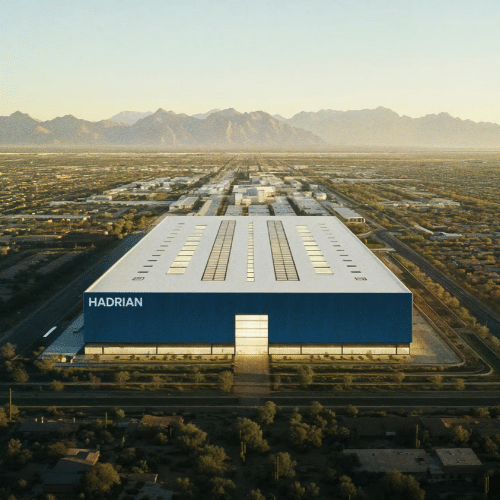
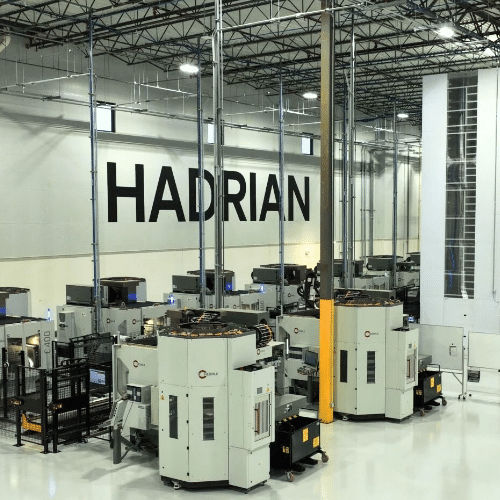

A central question is whether proximity to the Greater Phoenix semiconductor cluster is accelerating adoption or whether this is a national trend playing out locally. One possible spillover is non-semiconductor manufacturers adopting fab-grade practices such as cleanroom discipline and precision automation. Hadrian and other major global brands have added to the Southeast Valley’s high-tech industrial base.25 Robotics has not taken humans out of the process; rather, the work has shifted toward monitoring machines, and skill requirements have risen, which is why Career and Technical Education (CTE) and micro-credential investment recur throughout this report.
24 A3D Manufacturing 2026, About Us – A3D Manufacturing
25 Marcus & Millichap, Phoenix Industrial Market Report 2Q26.
Outlook and Opportunity
The obvious exposure for emerging manufacturing is semiconductors. If AI demand falls short, or federal policy on AI, the CHIPS Act, tariffs, or trade changes course, the effects would reach every industry in this report. For now, the signal is strong: TSMC’s CEO C.C. Wei expects AI-related demand to stay very strong until around 2029, and the company raised its 2026 capital budget to $60 billion to $64 billion.26 Intel, which operates Fab 52 in Chandler, reported second-quarter 2026 revenue of $16.1 billion, up 25%, with its data center and AI segment up 59% and server demand outpacing supply.27 NVIDIA reported second-quarter fiscal 2027 revenue of $96.2 billion, including $89 billion in data center sales, and guided to about $108 billion for the next quarter.28 That demand traces back to the hyperscalers, whose four largest members are collectively guiding to roughly $745 billion in 2026 capital spending.29 The signal is not risk-free. Analysts note that efficiency gains or slower-than-expected AI revenue could lead customers to revise spending plans.30
Better integration across industry reduces reliance and dependence on any one industry; the constructive question is how to diversify and how to retain and reskill workers if the mix changes. Decades of investment in the related fields of medical manufacturing, biosciences and healthcare innovation are now bearing fruit in Greater Phoenix, and there’s additional potential in energy and aerospace and defense. All of these industries could be impacted by emerging technologies in manufacturing; workforce development and education will always be necessary, which makes it the clearest no-regrets investment. Several opportunities follow from it:
Give Educators a Shared View of Employer Demand
A regular, regionwide assessment on hiring needs would help colleges and universities formulate programs and curriculum ahead of demand. This can be accomplished through convening industry professionals to identify uniform workforce needs, which can in turn be shared with education professionals for implementation.
Make Short-Cycle Training Easy to Find
Scale microcredentials, CTE, and earn-and-learn programs built with in collaboration with employers and pair them with targeted community outreach (for example K-12 students or job seekers) so residents know where to start.
Build Skills That Travel
Technician and automation competencies overlap heavily across advanced manufacturing, with some regional leaders citing as much as 80% overlap with semiconductor technician work.31 Training in transferable skills makes workers and the region more resilient if the makeup of industries in the region shifts.
Get Ahead on Space Constraints
Conduct a comprehensive market assessment of available properties and determine if retrofits are needed to address current space demands for manufacturers and their supply chains.
Attract Additional Suppliers
Identify tier 2 and 3 supplier companies earlier through supply chain analyses and develop tailored outreach to attract them to the region.
Broaden the Base
Connect semiconductors with biosciences, health, energy, and aerospace and defense companies, and support automation and AI adoption among existing manufacturers.
What Are Other Regions Doing?
Regions with their own chip investments are experimenting with ways to move faster. In central New York, a regional economic development group co-convenes a consortium of more than 40 education and workforce organizations around Micron’s investment and is working to adopt industry-recognized credentials for each technician level, tested against employer requirements to standardize the education.32 Austin Community College’s four-week STARS program, built in partnership with five companies, upskills high-potential employees nominated by their supervisors, and pays the employees to participate.33 Upstate New York has run a registered apprenticeship for chips-related jobs since 2016 and added a pre-apprenticeship for women, while Arizona launched its first registered apprenticeship for semiconductor facility technicians in late 2023.34 Thus, Arizona has its own advantages, including a hub-and-spoke community college system and regional CTE institutions, West-MEC and EVIT, that few regions can match.35
26 TSMC second-quarter 2026 earnings coverage (Betanews, July 16, 2026).
27 Intel Corporation, “Intel Reports Second-Quarter 2026 Financial Results,” July 23, 2026.
28 NVIDIA second-quarter fiscal 2027 results, reported Aug. 26, 2026 (via HotHardware, Aug. 27, 2026, and Under30CEO, Aug. 31, 2026).
29 The Motley Fool, “What is next for data center revenue?” (2026).
30 The Motley Fool, 2026.
31 Lavea Brachman, “Semiconductor Investments are Reshaping Four Regional Workforce Development Systems,” 2026.
32 Brachman, 2026
33 Brachman, 2026
34 Brachman, 2026
35 Brachman, 2026
Download the PDF on the Future of Emerging Manufacturing in Greater Phoenix.


Industry Expert
Thomas Maynard
ExecutiveVice President,
Business Development
Published: 10/20/2026