

Ambassador Event: The Future of Startups & Entrepreneurship Ecosystem
Published: 11/19/2026
A startup ecosystem with a mix of local and out-of-state investment are shaping Greater Phoenix’s next phase of growth
Over the past decade, Greater Phoenix has built the key foundations for a strong startup ecosystem. The region has a growing group of local investors and entrepreneurs, renowned higher education programming, transformative global companies and one of the largest populations in the United States.
The next phase is about connecting those pieces.
On Nov. 10, the Greater Phoenix Economic Council (GPEC) hosted a panel of founders and investors at its Ambassador Event to discuss the future of the region’s startup and entrepreneurship ecosystem.
The panelists were:
- Kaled Alhanafi, Co-founder & CEO, Basata
- Janelle Goulard, Partner, Pangaea Ventures
- Roberto Guerrieri, Co-founder & CEO, Bluetail
- Moderator: Tim Bourcet, Vice President, Government & Community Affairs, GPEC
In addition to the panel, GPEC released a new report examining the priorities and opportunities that can drive the industry forward.
A proving ground backed by major industry customers
In Greater Phoenix, startups don’t have to look far for their first big customers. From semiconductors and advanced manufacturing to aerospace and healthcare, local industrial strengths give young companies a place to test ideas and sharpen their products.
For Bluetail, which uses to digitizes and organizes aircraft records, conversations with legacy companies in the region like Honeywell and Boeing helped refine the AI startup’s pitch and target market.
“What’s really smart for entrepreneurs is to know where not to go,” Guerrieri said. “I think being here led us to get our product to launch faster.”
Healthcare startups see a similar advantage. Basata uses applied AI to clear administrative bottlenecks in patient care, and Greater Phoenix provides opportunity for the company to build right alongside its customers, given its established health systems, large retiree population and steady pipeline of talent from Arizona State University.
“It makes it really easy to go and build — not in a bubble — but actually building inside of these healthcare organizations, asking them questions and living day-to-day what their problems look like,” Alhanafi said.
Those relationships can go even further when a large company becomes a startup’s first paying customer. Paid pilots, in which a large company pays to try out a startup’s product, are one of the best ways to land that first contract. “You need, of course, paid pilots, but also two other things,” Alhanafi said. “One, champions within these organizations to actually move things along … Two, you need very clear success metrics.”
A paid pilot also shows investors and other customers that a large company trusts the startup’s product.
“How many times you go to a VC, a bank, even a large customer, and they’re like, ‘Come back when you have traction,’” Guerrieri said. “Everything you’re building early is credibility.”
Arizona’s self-driving car industry grew because state laws allowed companies to test on public roads, and the same approach could open the door for industries like eVTOL aircraft and healthcare. A strong proving ground environment needs both the right physical conditions and business-friendly regulation.
“True transformation comes from a regulation that needs to be disrupted,” Goulard said. “Anywhere where those terms are favorable, you’re going to see companies attracted to that ecosystem.”
Strong companies attract capital
Greater Phoenix’s startup community has grown significantly over the last decade, and more of the money behind it now comes from within the region. Guerrieri has seen that change firsthand. When he raised money for his first Arizona startup in 2000, nearly all of it came from Silicon Valley.
“95% of the money I raised in my first startup was Bay Area,” he said. That flipped with his new company in 2020, following contact with Copper Sky Capital. “95% of Bluetail was raised here.”
Local and outside investors each play a role. For Basata, local investors such as PHX Ventures helped with hiring and community connections, while San Francisco investors opened the door to larger funding rounds.
Bringing in more outside capital starts with the companies themselves. Pangaea Ventures, which moved its headquarters to Phoenix seven years ago, invests in hard tech that supports AI, such as photonics, semiconductor packaging and data center cooling. Investors will follow the strongest companies, regardless of location.
“The best companies will get funded. It won’t matter what city you’re in,” she said. “To say more startups will get us better outside investors, it’s actually better startups that will get us there.”
Telling the story to win talent
Every startup needs talent, customers and capital to grow, and winning all three starts with a clear story backed by real results. The ability to highlight these results matters most when recruiting experienced professionals away from jobs that are traditionally more stable.
“We have to be able to tell inspiring stories on how bad the status quo is, what we’re trying to change about it, and then showcase the proof points,” Alhanafi said.
Impact is often the strongest selling point. At a startup, every hire shapes the company, and the best candidates think like owners, not employees. Beyond the role itself, candidates also weigh where they’ll live, and Greater Phoenix’s affordable cost of living lets young professionals build the life they want.
“We always use the word ‘impact’,” Guerrieri said. “Do you want to be one of 50, or one of 1,000?”
What success looks like in five years
Further success for Greater Phoenix’s startup community will show up in the companies it grows and nourishes. When founders build here, stay here and mentor new entrepreneurs, they help start more local companies, creating a “family tree” of startups.
“Founders staying here, helping the next generation of entrepreneurs, and the whole investment system just feeding that,” Guerrieri said.”
Larger exits will also prove to investors and future employees that the region can produce major wins. Greater Phoenix already has many of the pieces in place, with major industries seeking to expand their supply chains, a growing base of local investors and firms, and a story that helps startups win top talent. As those pieces come together, more startups will naturally flock to Greater Phoenix.
“I think startups come because they see this as the best place to build their business,” Goulard said.
Meet the Panel

Kaled Alhanafi
Co-founder & CEO
Basata

Janelle Goulard
Partner
Pangaea Ventures
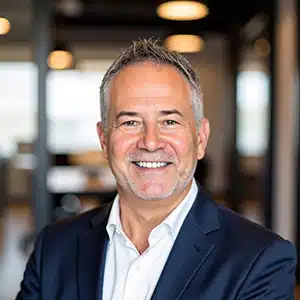
Roberto Guerrieri
Co-founder & CEO
Bluetail

Tim Bourcet
Vice President, Government & Community Affairs
Greater Phoenix Economic Council