

Ambassador Event: Every Drop Art Exhibit Opening
Published: 11/20/2026
Greater Phoenix's relationship to water shapes the community, ecosystems and art that enable the region to thrive
Greater Phoenix's story has always been intrinsically tied to water, and so has its arts and culture ecosystem. A proactive approach to water has defined the region for more than a century, and few things bring that to life in a more tangible way than the arts.
That legacy was front and center at the Greater Phoenix Economic Council's (GPEC) opening for its Greater Phoenix: Every Drop exhibit, where two local leaders shared how water shapes the region's culture, creativity, innovation and sense of community. Throughout the discussion, a central theme became clear: The same resource that enables the region's growth also connects the people who live here, and the arts are one of the most powerful ways to strengthen that connection.
The evening opened with an A New Way To City video on Arizona's water story and Salt River Project's (SRP) critical role in the region's water stewardship and drought management. The feature set the stage for the exhibit's theme. Every Drop examines the vital role water plays in shaping Greater Phoenix, celebrating the ingenuity that allows communities to thrive in an arid landscape.
The panel consisted of:
- Dr. Gerd Wuestemann, President & CEO, Scottsdale Arts
- Kellie Elliott, Recreation Coordinator II - Naturalist, Town of Gilbert
- Stefanie Carson, Creative Director, Greater Phoenix Economic Council (Moderator)
"It's a desert. Without water, none of this can exist," Wuestemann said.
A foundation built to last
Arizona is no stranger to water innovation. The Hohokam built the first canals in the region, and generations of leaders have built on that foundation, from Roosevelt Dam to the Central Arizona Project's 336-mile canal system to the 1980 Groundwater Management Act, which made Arizona the first state to require an assured 100-year water supply for new subdivisions.
That proactive approach has allowed businesses and residents alike to maintain confidence in an enduring water supply as Greater Phoenix continues to grow with intention. The region continues to invest in water innovation, including advanced purification and expanded reuse.
As GPEC President & CEO Christine Mackay emphasized when introducing the art opening, businesses deciding where to locate need more than a strong business climate. They need a community with a distinct identity and a story worth being a part of. Arts and culture help fill that gap.
Placemaking through public art
Scottsdale Arts exemplifies how a piece of water infrastructure can become a catalyst for community through Canal Convergence, its annual public art event. Each autumn, light-based installations, performances, workshops and family activities transform the Arizona Canal into an immersive, personality-filled art experience.
The event’s roots trace to a partnership between the City of Scottsdale and SRP, which manages the canal system, to bring the community to the waterfront for public events that also teach people about the canal’s history and water management. That collaboration grew into the first official Canal Convergence in 2012. Over the last 15 years, this has grown into a 10-night signature event, free and open to all. This year’s theme, “Western Nature,” was a nod to Scottsdale's 75th anniversary year and its identity as "The West's Most Western Town," bringing a mix of serious and playful work to the water, from giant illuminated cacti floating on the surface to animals projected onto suspended blossoms.
"Public art is 100% subversive," Wuestemann said. "You don't have to buy a ticket. You don't have to do anything... It changes you a little bit every day."
That accessibility is the point. In a moment when many are asking what technology means for our future, Wuestemann noted that the arts remain one of the last person-to-person businesses, bringing people together around shared experiences. Done well, public art can also make conversations about conservation and sustainability feel more personal and approachable, turning topics that otherwise might divide into points of connection. The Town of Gilbert's Riparian Preserve echoes this idea, with water bringing together people of all ages.
Nature as a classroom
The Riparian Preserve at Water Ranch offers a different look at the power of water as a convener. With no connection to a natural waterway, the preserve began as agricultural land with no trees, and water transformed it into a thriving habitat for wildlife and a place for people to connect with nature. Today, it's a 110-acre wetland and wildlife sanctuary with hiking trails and campsites.
Elliott sees the impact of water every day in her role overseeing the preserve's operations and educational programming. Her favorite part of the job? Handing a child binoculars for the first time. The lesson clicks quickly: When kids see 15 egrets and six great blue herons in one place, they understand why the birds are there: the water.
Much like Canal Convergence, the preserve is intentionally accessible. Its trails are navigable for those with mobility challenges, and on any given morning, a walking club, homeschool groups, field trips and group homes might be sharing the space.
"It's really the water that's bringing them there," Elliott said.
The preserve also reflects Gilbert's broader approach to water. The town has operated a reclaimed water system for more than 40 years, capturing, treating and reusing water for landscape irrigation and aquifer recharge, so every drop can be maximized.
When asked what gives her hope for the future of Greater Phoenix, Elliott pointed to how residents are adapting to life in the desert.
"Crisis can breed a lot of creativity," she said.
Conservation is already changing the region’s landscape, with Elliott seeing more residents swap water-thirsty turf and oleander for native plants like palo verde and globe mallow. It's the same spirit of innovation that has shaped the region's approach to water from the start: Constraints drive creativity, and Greater Phoenix has a long history of putting that idea into practice.
Growing a creative ecosystem
Wuestemann closed the conversation by drawing a cogent parallel: The Riparian Preserve is an ecosystem, and so is the region's arts and culture sector. In his view, there's incredible opportunity to nurture what's already here and give local talent a wider platform. As Carson noted in closing, the more the community builds that collective creative momentum together from the ground up, the more authentic a reflection of the region it becomes.
Stories were the through line of the evening, and they’re at the heart of A New Way To City, the regional storytelling platform that highlights the one-of-a-kind people, places, industries and creativity shaping Greater Phoenix. Greater Phoenix: Every Drop shares that goal through art, with local artists offering their unique perspectives on the people, places, systems and stories that sustain life in the desert. Together, their work shows that every drop has a story, and that Greater Phoenix’s relationship with water is something to be seen, and felt, as much as understood.
Meet the Panel

Kellie Elliott
Recreation Coordinator II – Naturalist
Town of Gilbert

Gerd Wuestemann
President & CEO
Scottsdale Arts
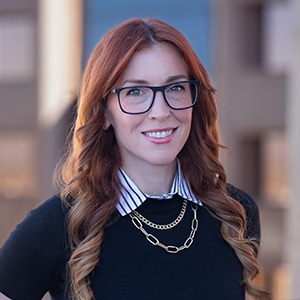
Stefanie Carson
Creative Director
Greater Phoenix Economic Council