Ambassador Event: A New Way to See Greater Phoenix art exhibit opening
Published: 05/26/2026
Greater Phoenix's arts and culture ecosystem serves as a crucial economic engine boosting livability and enabling business growth
Art has the power to transform communities.
That sentiment was on full display at the Greater Phoenix Economic Council’s (GPEC) opening for its A New Way To See Greater Phoenix art exhibit, where a panel of local leaders spoke to the impact of arts and culture on the region. Throughout the discussion, a clear through line emerged: A region's creative ecosystem is paramount to its economic competitiveness and community growth.
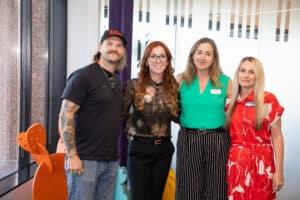
This is evident in Art State Arizona's advocacy, accessible community events like VIVA PHX, and the Desert Botanical Garden's strategic future-proofed vision. Innovative initiatives like these reveal the true community impact of arts and culture — and it extends well beyond the galleries, museums and exhibits the name might bring to mind. The panel of local arts and culture leaders proving the value of the industry at GPEC's recent exhibit opening consisted of:
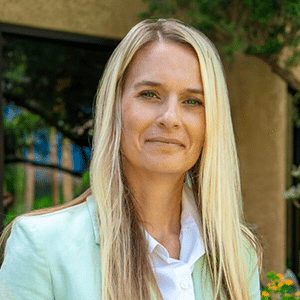
- Kate Marquez, Founder & CEO, Art State Arizona
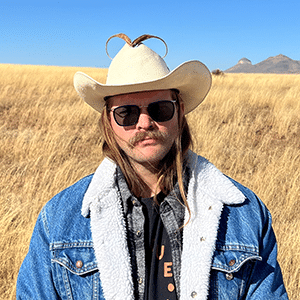
- Matt Baquet, Co-founder/Executive Producer, Eros Works
- Laura Spalding Best, Senior Director of Exhibits, Desert Botanical Garden
- Stefanie Carson, Art Director, Greater Phoenix Economic Council (Moderator)
“I believe that artists always set the trends, and I believe that creative business people and entrepreneurs usually follow," Baquet said.
The creative economy as an engine for economic development
The arts and culture sector serves many roles. The most visible may be culture enhancement, community-building and regional storytelling, but what is often overlooked is how it is ultimately an incredibly potent lever for economic competitiveness.
The panelists reiterated it time and time again: A thriving regional arts and culture sector is not an abstract, nice-to-have notion, but rather a precondition for a community’s overall economic and cultural growth.
"When a business is trying to choose where they want to relocate or where they want to expand, they want to open in a place where there are things to do," Baquet said. "Where there's a vibrant culture, where there's cool art and shows and good food."
The impact matters inside organizations too. Art State Arizona's work with Roche Tissue Diagnostics illustrates this well. The tissue-based diagnostics company was navigating significant retention challenges amidst rapid growth, and Art State Arizona worked with them to tell and interpret their story through art in what became the Ventana Gallery in the heart of the research center. Marquez spoke on how meaningful the project became to those involved.
"Everyone that participated in that project said, 'I will never leave this company, because they see me in a way that no one else does. They know my story,'" she said.
These blending pieces create a story unique to a region. Crafting this curated regional experience has a clear ripple effect that boosts talent attraction and retention and reinforces a community's reputation on a local, national and global scale. In short, it creates a community people are excited to live and do business in — and for Marquez, that's the whole point: Arts and culture is the economic engine for any city that wants to be truly livable. Prioritizing creativity is prioritizing competitiveness.
Placemaking and community-building through arts and culture
If you want to experience a region's vitality, look first to its arts and culture sector. And the best place to start is in your own backyard.
Each panelist has taken that approach in their own way, meeting people where they are through accessible, community-rooted initiatives. VIVA PHX does this on a city level, intentionally weaving together local music, art, food and small businesses into a free or low-cost showcase that demonstrates the area's creative vibrancy. Timed strategically with major events like the Forbes Under 30 Summit, it's designed in part to celebrate the community and in part to attract additional residents, talent and investment. Art State Arizona works at the intersection of creativity, community and economic impact, building programs that reflect the communities and neighborhoods they serve. The Desert Botanical Garden creates immersive experiences that blend art, nature and education — with accessible touchpoints like pay-what-you-can days that keep the door open for everyone.
Access is at the center of all of it. For Baquet, VIVA PHX embodies that principle directly by lowering barriers of entry to community events. At the Botanical Garden, that access is at the core of its strategic vision.
The recently unveiled 2040 Compass charts the institution's future around its centennial in 2039, with art central to the plan. Spalding Best's background in fine art offers a curatorial lens to what is, at its core, a living museum. With over 50,000 desert plants and 26 research scientists on staff dedicated to conservation, the Garden is as much a scientific institution as it is a cultural one. It runs rotating sculptural exhibitions with works thoughtfully placed in dialog with the plants and landscape, alongside immersive evening experiences like Garden After Dark.
It's a model that turns every visit into something new.
"When we center the art as part of that experience for visitors, there is a much bigger open door for people," Spalding Best said. "When we connect art to the plants, to the region ... we see that have a great impact for visitors."
Art State Arizona's Catalyst Creative Collective tells a similar story. The 14,000-square-foot maker space, which includes a robotic studio, film lab, kitchen and art studio, opened just two months before COVID was declared a pandemic in 2020. It quickly shifted into a collective model that welcomed organizations across sectors as they faced losing their own spaces.
"The cross-sector learning that has come to us from working with organizations in education and workforce development have really centered our understanding of how powerful this sector is," Marquez said.
The solution to sustaining this work looks different for every organization and initiative, but the connective tissue is the same. It starts with community buy-in, and it grows when people find their own stake in it. "When you all find your common vision of value, whether you're Roche Tissue Diagnostics or the Taco Bell that's building in Oro Valley that has a piece of public art up, they find their value in it and they invest and they lean in deeper," Marquez said. That's true whether you're running a citywide festival, a living museum or a statewide arts organization. When the community sees itself reflected in the work, the rest follows.
Telling the story of a region
The value of collective storytelling was at the heart of the conversation at GPEC's exhibit opening — and it's equally central to the region's A New Way To City campaign. Every region has a story. What sets Greater Phoenix apart is the way we're telling it to the world. The campaign is built on real stories from the people actually shaping the region, doing things here that can't be done anywhere else.
Identifying and amplifying those perspectives is at the core of GPEC's newest art exhibit. Aligned with the objective of A New Way To City, this new display of our region's electric local talent truly does offer A New Way To See Greater Phoenix.